Choosing a tent by berth is one of the most straightforward ways to narrow down your search, and that's exactly what this collection is built around. From compact 2-man tents suited to couples and solo adventurers with kit, right through to sprawling 8+ man configurations designed for larger families or group trips, every berth size is represented here. Poled and AirBeam inflatable designs sit alongside each other across all sizes, and you'll find options built from lightweight polyester, technical polycotton blends, and fully recycled fabrics depending on the brand and model. The collection spans a wide price range, from affordable entry-level tents through to premium family tents with blackout bedrooms, vis-à-vis layouts, and hydrostatic head ratings of up to 6,000mm.How do I choose the right tent size for camping?
Tent berth ratings are based on people sleeping side by side with no kit. For real-world comfort, size up by at least one berth per two people. A family of four needs a 5 or 6-man tent. A couple wanting airbeds and storage space will be more comfortable in a 3 or 4-man than the rated 2-person equivalent.
The brands stocked across this collection cover the full spectrum of the UK camping market. Vango lead on innovation with their AirBeam® system available across 4 to 8+ man tents, alongside their Earth Collection recycled fabric range and Nightfall blackout bedroom technology. Outwell focus on comfort-led design with a Sleep Comfort ethos that allocates 70-80cm per person in bedrooms rather than the industry standard 60cm, and their Outtex® flysheet fabrics range from 4,000 to 6,000mm HH. Easy Camp offer strong value at the smaller berth sizes, whilst Royal Leisure and Robens bring alternative styles including polycotton options and more distinctive tent forms for campers who want something away from the mainstream tunnel design. Dometic Kampa round out the brands for those wanting established credentials with a slightly different aesthetic.
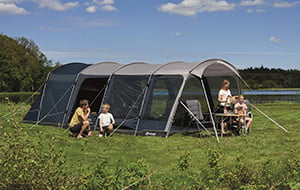
The majority of customers browsing tents by size fall into a few clear groups. Young families looking for their first proper camping tent gravitate toward 4 and 5-man options that offer a living area with a separate sleeping compartment, making evenings easier when young children need to go down before adults are ready. Established family campers often go straight to 6 or 8-man tents, particularly vis-à-vis designs where bedrooms sit at opposite ends of a central living space, giving older children and parents separate zones. Couples and pairs who camp regularly tend to find the 3-man sweet spot gives room for two airbeds and kit without the bulk of a larger tent. If you're buying a tent, it's worth pairing it with a suitable footprint groundsheet, tent carpet, and inner tent to get the most from any berth category. The Tent Accessories and Sleeping Bags collections on site complement this range well.
When selecting by size, the berth number is only part of the decision. AirBeam tents pitch faster and are generally better for solo pitching, whilst poled tents pack smaller and lighter for the same sleeping capacity. Hydrostatic head ratings matter significantly for UK camping: a minimum of 3,000mm HH is a sensible baseline for British conditions, and if you're planning extended trips or camping on exposed sites, 5,000mm or above is worth prioritising. At entry level, expect fibreglass poles and polyester flysheets with 2,000-3,000mm protection. Mid-range tents move to aluminium poles or quality AirBeam systems with 3,000-4,000mm ratings and features like blackout bedrooms and built-in porches. Premium options bring polycotton fabrics, 5,000-6,000mm hydrostatic heads, and comfort-focused layouts with full standing headroom.
The most common purchasing mistake when buying by berth size is matching the label to the number of people going. A 4-man tent is genuinely comfortable for two, workable for three with modern airbeds, and a squeeze for four adults with any kit. Always factor in your sleeping setup: a standard airbed takes up significantly more floor space than a slim self-inflating mat. Blackout bedroom inners are worth seeking out in any size if you're camping in summer or with young children. For winter or shoulder season camping, prioritise tents with a sewn-in groundsheet and storm guyline points regardless of berth size. Pack size varies considerably even within the same berth category, so if boot space or home storage is a concern, check the packed dimensions and weight before committing.How popular is tent camping in the UK?
42.2% of UK adults go camping at least once a year, and the UK camping market reached £2.83 billion in 2024. The market is forecast to grow by around 9% in value over the coming years, driven by families, younger generations aged 25-34 who camp an average of 2.79 times per year, and sustained demand for affordable UK-based holidays.

Frequently Asked Questions
How do I work out what size tent I actually need?Tent berth ratings are based on the number of people who can sleep side by side with no kit inside. The rated number never accounts for gear, airbeds, or living space. A practical rule is to size up by at least one berth per two people. A family of four will be comfortable in a 5 or 6-man tent, and a couple wanting to use airbeds and store kit will be better suited to a 3 or 4-man. Industry standard sleeping width is 60cm per person, though brands like Outwell use a comfort standard of 70-80cm per person, which is more realistic for UK camping with modern sleep setups.What size tent do I need for 2 adults and 2 children?Two adults and two children are typically best suited to a 5 or 6-man tent. A 4-man tent can work if the children are small and sleeping on slim mats, but it gives very little room for airbeds, kit, or a living area to shelter in on wet days. A 5-man tent with a separate living space and one or two bedroom compartments is the most practical starting point, and a 6-man gives genuine comfort with a full living area, space for double airbeds per bedroom, and room to sit out a rainy afternoon without being cramped.What is the difference between a 2-man tent and a 4-man tent for a couple?A 2-man tent is designed for two sleeping bags placed side by side with minimal space. There is typically no room for bags, boots, or any porch storage. A 4-man tent gives a couple space for a double airbed, room to sit up and dress, and often includes a small porch or living area. For a couple camping with any kit at all, a 3 or 4-man tent is the more practical choice, particularly for trips of more than one night where you need somewhere to keep muddy boots and wet gear out of the sleeping area.What is the best tent size for a family of 4 in the UK?A 5 or 6-man tent is typically the most comfortable choice for a family of four in the UK. This gives you a living area where you can eat and shelter from the rain, separate sleeping compartments where needed, and space for airbeds, sleeping bags, and general kit. Families with younger children often prefer a single large bedroom with a divider for easy night-time access, whilst families with older children benefit from a vis-à-vis layout with bedrooms at opposite ends for a degree of privacy.What is an AirBeam tent and is it better than a poled tent?AirBeam tents use inflatable tubes instead of rigid poles to create the tent structure. A hand pump is included, and most family-sized AirBeam tents take around 10-15 minutes to pitch by one person. Poled tents use fibreglass or aluminium poles fed through sleeves or clipped to the tent, and typically pack smaller and lighter for the same berth size. AirBeam tents are heavier and bulkier to transport and cost more at the same berth level. AirBeam frames flex in high winds rather than snapping, which is a practical advantage in changeable UK weather. Poled tents are easier to repair if a pole breaks, as replacement sections are widely available and inexpensive.What hydrostatic head rating do I need for camping in the UK?Hydrostatic Head (HH) measures how waterproof a tent fabric is, expressed in millimetres. The higher the number, the more water pressure the fabric can resist. A rating of 1,000mm is the legal minimum to label a tent waterproof in the UK, but for genuine protection in British conditions, 3,000mm is the practical baseline. For camping in exposed locations, Scotland, Wales, or into autumn, 5,000mm or above gives better protection. Outwell's premium range uses Outtex 6000 fabric at 6,000mm HH. Polycotton tents do not carry an HH rating as they waterproof differently: the cotton fibres swell when wet to seal the weave naturally.What is the difference between a tunnel tent and a vis-à-vis tent layout?A tunnel tent has bedrooms at one or both ends of the tent with a living area running along the central section. Vis-à-vis layouts position two separate bedroom compartments at opposite ends of a shared central living space, facing each other across it. Tunnel designs with a single bedroom grouping tend to work better for families with younger children who need to be kept close. Vis-à-vis layouts suit families with older children or groups of adults who want a degree of separation. The vis-à-vis layout also allows you to remove one inner bedroom entirely, increasing the usable living space when the full sleeping capacity is not needed.What is the difference between a polycotton tent and a standard polyester tent?Polyester tents are the most common type, using synthetic fabric treated with a waterproof coating. They are lighter, pack smaller, dry faster, and cost less than polycotton equivalents. Polycotton is a blend of around 65% cotton and 35% polyester. The cotton content makes the fabric breathable, reducing condensation significantly and keeping the interior cooler in summer and warmer in spring. Polycotton tents are heavier, bulkier to store, and more expensive. They also need to be pitched and allowed to get wet at least once before they are fully waterproof, as the fibres need to swell and seal. For regular campers on longer trips or camping in hot weather, polycotton is worth the extra cost. For occasional UK camping, polyester works well.What does blackout or Nightfall bedroom technology mean on a tent?Blackout bedroom technology uses a dark-coloured or heavily woven inner tent fabric to significantly reduce the amount of early morning light entering the sleeping area. Vango calls their version Nightfall; Outwell uses the term Dark Inners. Both work on the same principle. In summer, tent interiors can become bright enough to wake children as early as 4am, which tends to affect the whole family's day. Blackout bedrooms meaningfully reduce this problem. The feature is most valuable for families with young children and for camping between May and August when UK sunrise is very early. It does not fully replicate a blackout curtain at home, but the difference in light levels inside the tent is substantial.Which tent brands are best for family camping in the UK?Vango and Outwell are the two most prominent names in UK family camping tents across all berth sizes. Vango specialise in AirBeam technology with their AirBeam® system available across 4 to 8+ man tents, and they produce both standard polyester and polycotton Earth Collection ranges made from recycled materials. Outwell focus on comfort-led design with generous sleeping widths of 70-80cm per person, dark inner bedrooms, and premium Outtex flysheet fabrics. Easy Camp offer strong value at the smaller end of the range, while Royal Leisure and Robens bring alternative styles including polycotton options and yurt designs for campers after something away from the standard tunnel tent.How do I choose between an 8-man tent and two smaller tents for a group trip?A single 8-man tent keeps the group together with a shared living area, which works well for families or groups who want a communal space. The downside is that one tent is harder to pitch alone, takes up a large pitch that some campsites charge extra for, and means everyone is affected if something goes wrong. Two 4 or 5-man tents give each sub-group more privacy, distribute the load across two vehicles more easily, and allow each group to pitch and strike camp independently. Two smaller tents also tend to pack more efficiently and are generally quicker to get up and down.How do campsite pitch sizes affect what tent size I can use?UK campsites vary considerably in pitch size, and larger tents can exceed the space available on standard pitches. Most standard campsite pitches are around 6 x 8 metres, but premium or touring pitches may be larger. An 8-man tunnel tent with a porch can easily exceed 8 metres in total length when fully pitched with guylines, so it is worth contacting the campsite in advance to confirm pitch dimensions if you are buying a tent over 6-man. Some campsites charge more for larger pitches or require you to book a specific size category. Always check the tent's footprint and packed dimensions before booking, particularly during peak summer weekends when pitches may be allocated at fixed sizes.
© Leisureshopdirect Ltd - 2004 . All rights reserved.