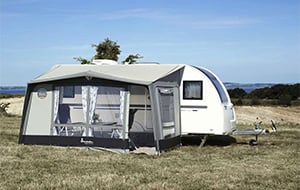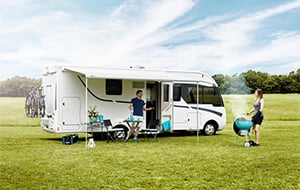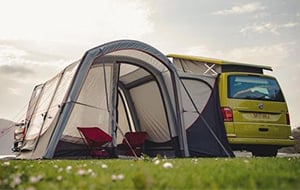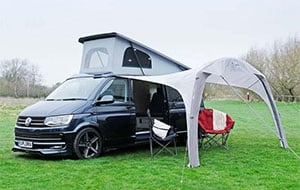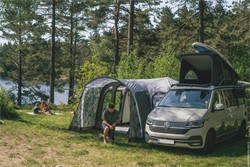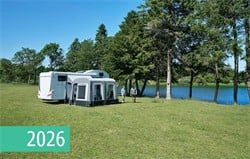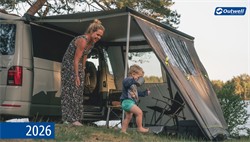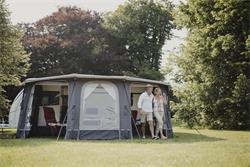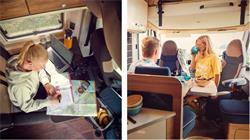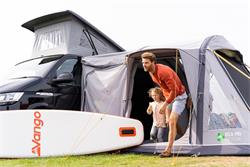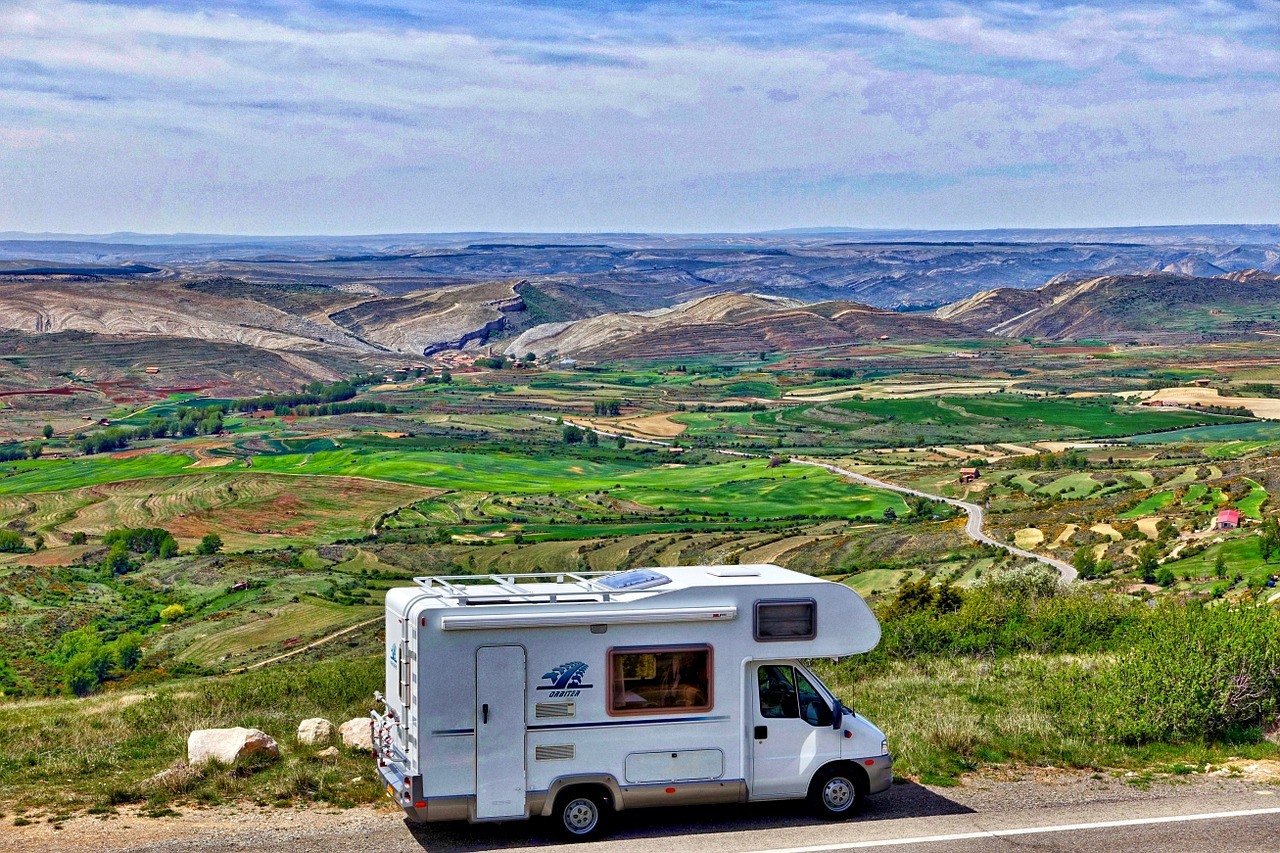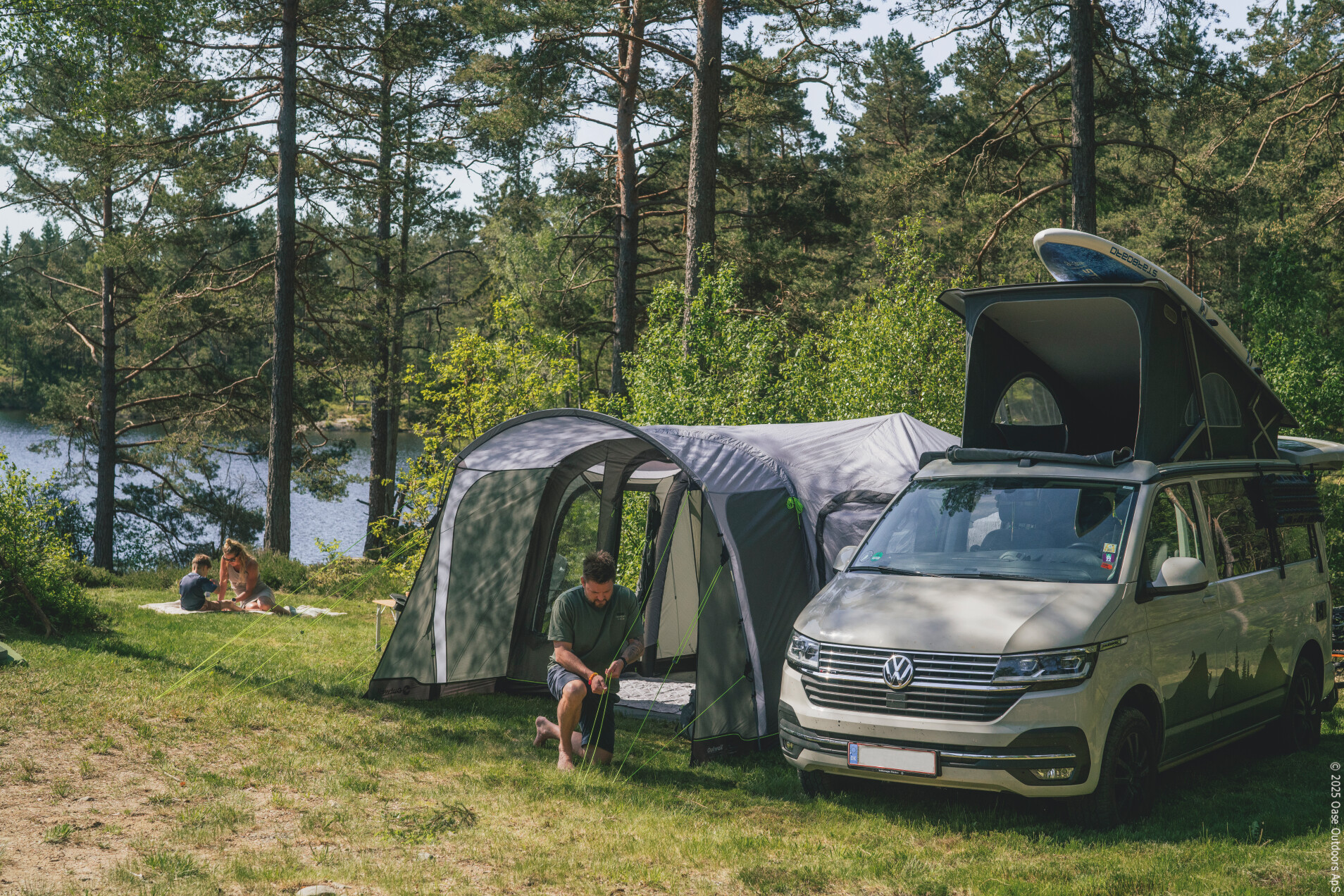
A driveaway awning is a freestanding shelter that attaches to the side or rear of a motorhome or campervan, then stays pitched when you disconnect and drive off for the day. It sounds simple, and it is. But the difference it makes to how you use your vehicle on a camping trip is significant. Without one, every time you want to pop to the shops, visit a beach, or do a day trip, you either leave your door exposed to the weather or pack everything down. With a driveaway awning pitched, your camp stays set up, your gear stays dry inside, and your pitch stays reserved. You drive back, reconnect through the tunnel, and you're home.
This guide covers the practical reasons motorhome and campervan owners across the UK choose to invest in a driveaway awning, the situations where they prove their worth, and the types of trips and locations where they make the biggest difference. If you're trying to decide a driveaway awning is right for you, or you already own one and want to get more use from it, this is the page for you.
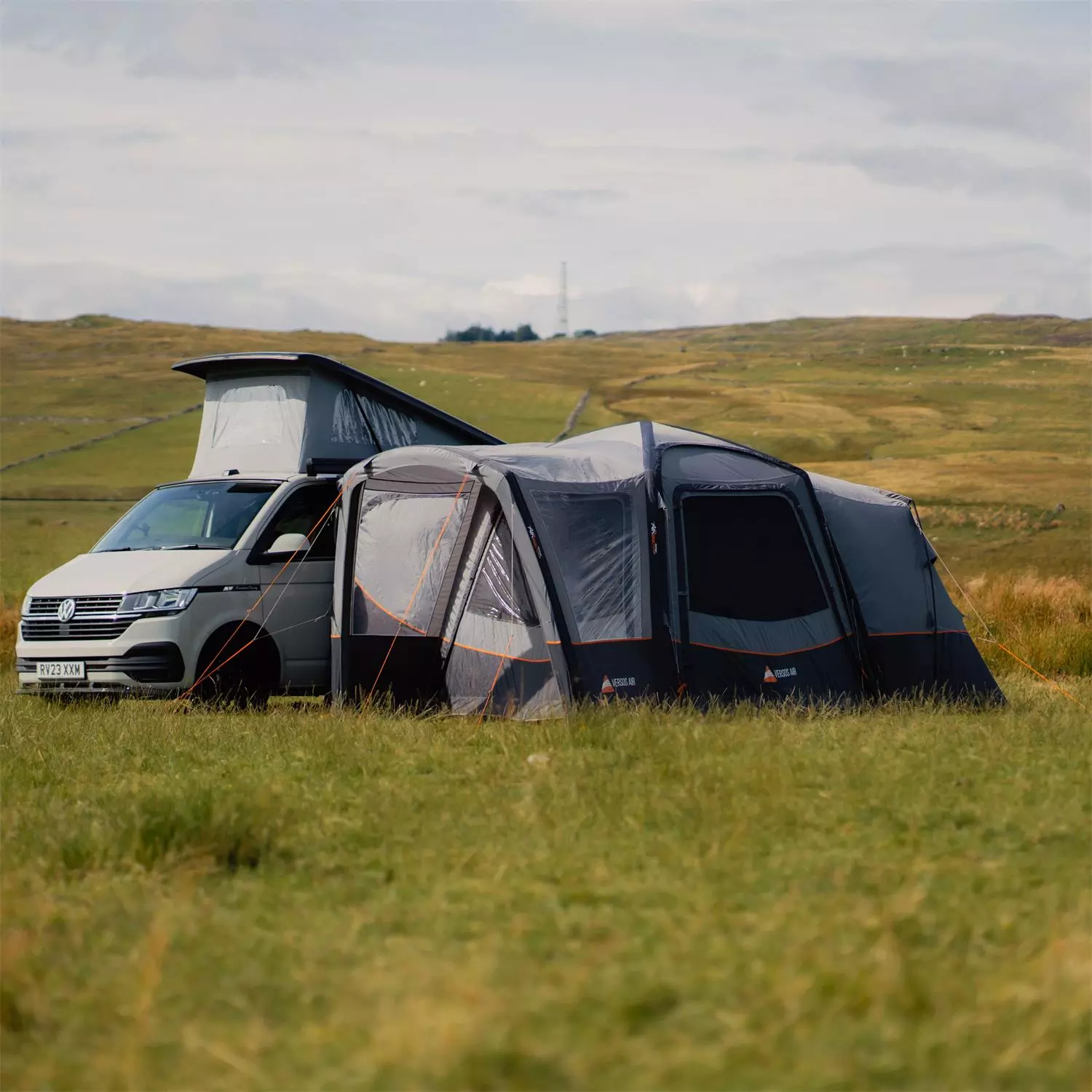
The core issue is space. A VW T6 campervan, one of the most popular leisure vehicles in the UK, has roughly 5.8 square metres of internal floor area. That figure includes the cab seats, the kitchen, the bed, and any storage. For two adults on a weekend trip, it works. For a family of four spending a week at a campsite, or a couple who want room to sit comfortably when it rains, it gets tight quickly. A mid-sized driveaway awning like the Vango Kela Pro Air adds approximately 11.5 square metres of sheltered floor space (310cm x 370cm footprint). That more than triples the usable living area you have on site.
Larger motorhomes on Fiat Ducato or Mercedes Sprinter chassis have more room inside, but the same principle applies. A coachbuilt motorhome from Bailey, Swift, or Auto-Trail typically has a fixed layout with a lounge, kitchen, bathroom, and sleeping area. There's rarely a dedicated space for storing wet coats, muddy boots, folding bikes, or beach gear without it encroaching on your living area. A driveaway awning gives you that space, and it stays pitched while you use the vehicle during the day.
The second issue is flexibility. Traditional caravan awnings bolt onto the side of a static vehicle. Your caravan stays put for the duration of your holiday, and the awning extends your living space permanently. Motorhome and campervan owners don't have that luxury. Their vehicle is both their accommodation and their transport. A driveaway awning bridges that gap. You pitch it once, use it for the duration of your stay, and only pack it down when you're leaving the site entirely.
The short answer is anyone who owns a motorhome or campervan and stays at a campsite for more than a single night. But different groups use them in different ways, and understanding these use cases helps explain why they've become one of the fastest-growing product categories in UK camping retail.
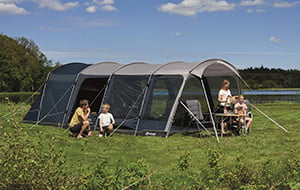
For families, the awning becomes the main living room during the day. Children need space to play when the weather turns, somewhere to eat meals that isn't on top of the beds, and a place to store their toys, clothes, and beach equipment. An awning with a clip-in inner tent bedroom also means kids sleep separately from parents, giving everyone more room at night. Popular family setups include the Vango Kela Pro Air, which has a 310cm x 370cm footprint and accepts optional two-berth or four-berth inner tents, and the Vango Galli Pro Air, which offers space for up to two separate inner bedrooms.
The Outwell Talladega Air is another strong family choice, with a design that pitches parallel to the vehicle rather than perpendicular. This gives a generous living area while keeping the overall pitch footprint narrower, which matters on tighter campsite pitches where a full side-facing awning would overshoot the boundary. Outwell's Outtex 4000 fabric (4,000mm hydrostatic head) and their Rigid Air System, where each air tube inflates and deflates separately through its own external valve, make it a practical all-season option.
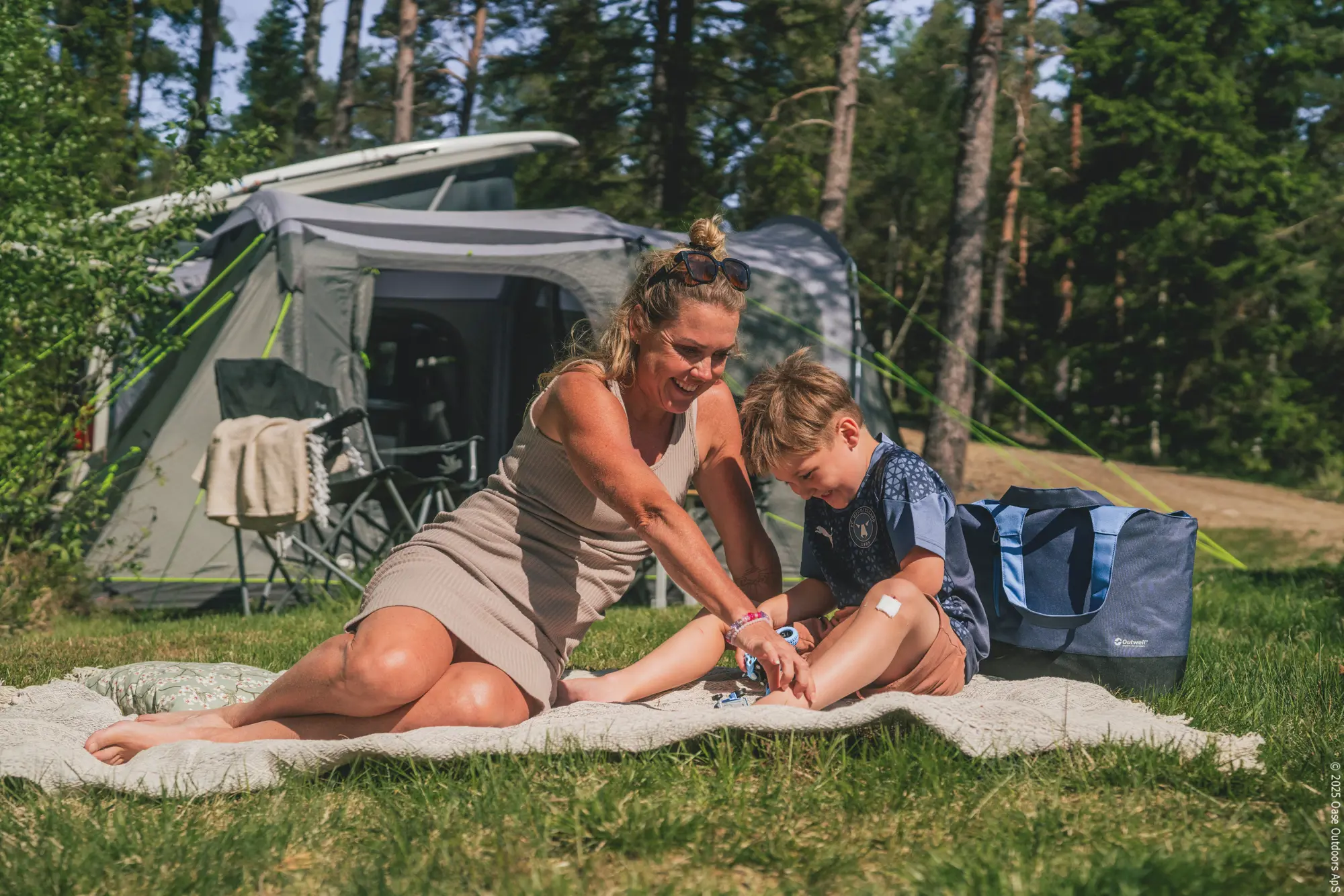
Couples who tour regularly tend to value quick pitching and compact pack size over maximum floor area. They want somewhere to sit out of the rain, store wet gear, and keep the van's interior tidy during longer trips. A front-facing awning like the Vango Cove III Air, with a 310cm x 320cm footprint, gives a comfortable sheltered area without dominating the pitch. The Quest Falcon Air 300 is another popular touring option with a 300cm x 250cm footprint, 150D Tec150 fabric rated to 4,000mm hydrostatic head, and a built-in zip-off driveaway attachment that removes the need for a separate driveaway kit. The Vango Faros III Air weighs under 10kg packed, making it light enough to carry without eating into payload limits on smaller campervans.
Solo motorhomers and campervan owners benefit from driveaway awnings because they provide a secure, sheltered area when you're the only person on site. If you're out walking or cycling during the day, the awning holds your camp together and protects your doorway from rain. Inflatable air awnings are particularly popular with solo campers because one person pitches them in 8 to 15 minutes without needing a second pair of hands. The Easy Camp Utne is worth considering for solo use: it weighs only 7.6kg, packs to 69cm x 24cm, and uses pre-angled fibreglass poles that one person handles without difficulty. Poled awnings are harder to manage alone in wind, but lightweight models like the Easy Camp Utne and Quest Eagle keep the process manageable even without help.
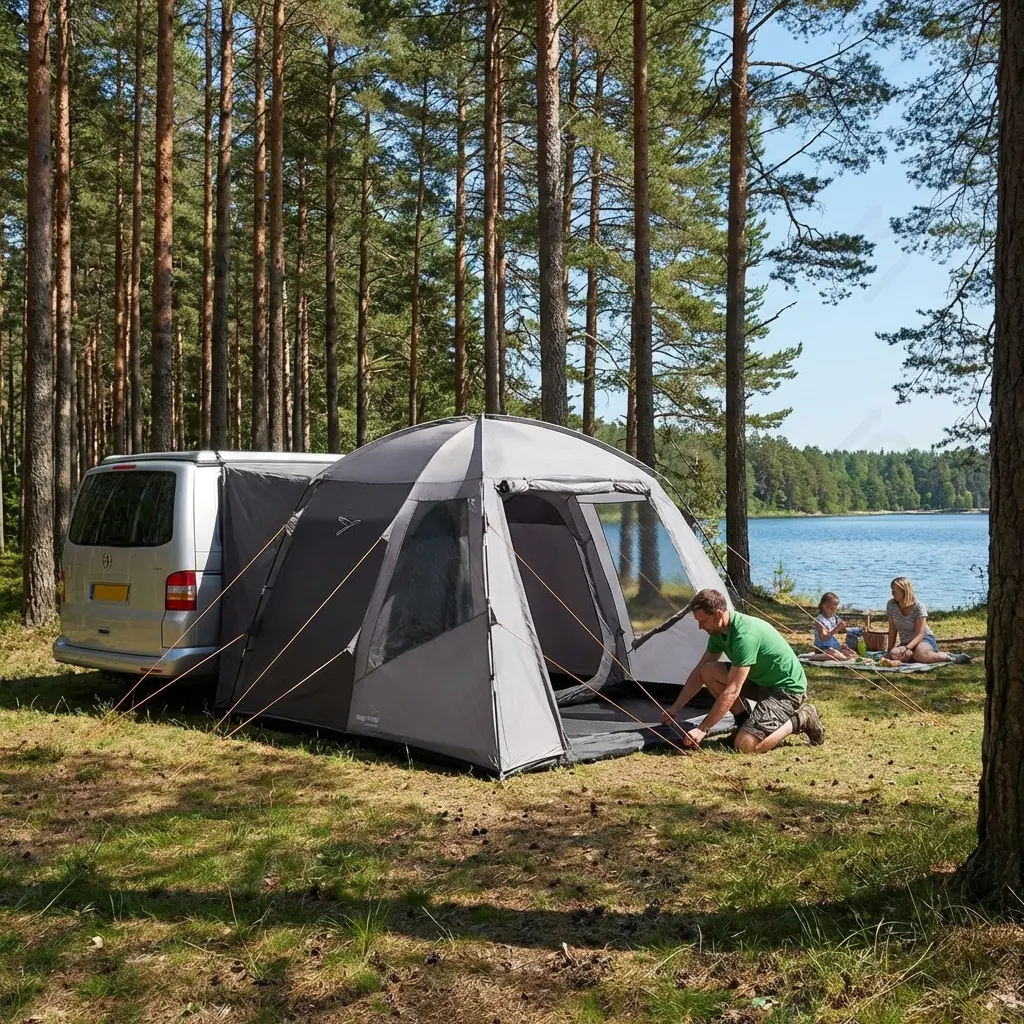
Campervan owners who travel with dogs often cite a driveaway awning as one of their most valued accessories. Dogs bring mud, wet fur, sand, and a general need for space that doesn't mix well with a compact van interior. An awning with a sewn-in groundsheet gives dogs a sheltered area to dry off after walks, a place to eat and drink without splashing the van floor, and somewhere to settle during the evening without taking up half the bed. Many owners use the tunnel section between the van and the awning as a dedicated muddy-paws zone.
Retired couples who spend extended periods touring, sometimes several months at a time, get the most cumulative use from a driveaway awning. When you're living in a motorhome for weeks rather than days, the awning becomes a permanent part of your daily routine. It's where you eat breakfast, read, dry laundry, store provisions, and entertain visitors from neighbouring pitches. For this type of use, durability and weather resistance matter more than pack weight. Higher-specification awnings using fabrics with a 4,000mm to 6,000mm hydrostatic head rating, like Vango's Sentinel Pro or Sentinel ECO Pro, hold up better over extended seasonal use than lighter touring fabrics.
The timing question matters because it affects which type of awning makes sense and how much you'll get from the investment. A driveaway awning that stays in the garage ten months of the year is expensive per use. One that comes out every other weekend from March to October earns its keep quickly.
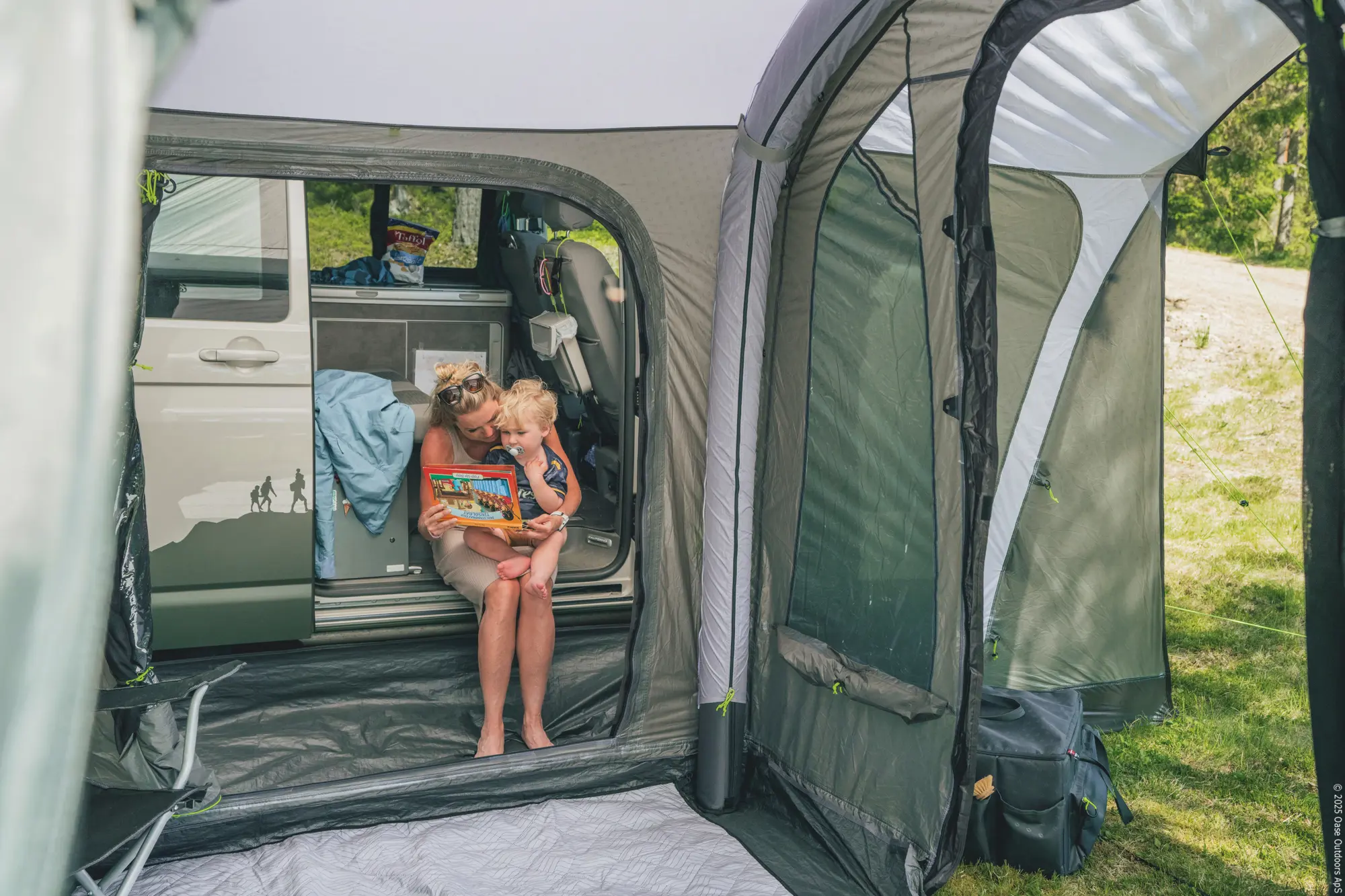
Short weekend breaks are the most common use case for driveaway awnings in the UK. You arrive at a campsite on Friday evening, pitch the awning, and leave it up for the duration. On Saturday, you detach the tunnel, drive to a local town or attraction, and return to a fully set-up camp. The awning saves you from packing down and repitching every time you move the vehicle. For weekend use, fast pitching matters most. An inflatable air awning that goes up in 8 to 10 minutes with one person is worth the extra cost over a poled model if you're doing this regularly. Poled awnings that take 20 to 30 minutes with two people start to feel like a chore on a two-night stay. That said, brands like Easy Camp and Quest have focused on making their poled models easier and faster to pitch. The Easy Camp Reine uses pre-angled fibreglass poles with a clip-on system that simplifies the process, and the Quest Eagle uses a minimal quick-fit pole frame that keeps total weight under 11kg.
A full week on one campsite is where driveaway awnings start to feel like an essential rather than a convenience. You set up once and use the awning as a living space for seven days. Day trips to beaches, attractions, and towns happen without any disruption to your camp. Children spread out with games and toys. Wet weather days become manageable because you have somewhere to sit that isn't the cab of the van. The Outwell California Highway Air is designed for exactly this kind of use, with its Outtex 4000 fabric, integrated Nightlight system for ambient evening light, and tinted windows that maintain a bright interior without excessive glare. Week-long stays also justify bringing accessories like awning carpets, groundsheet protectors, and clip-in bedrooms that you wouldn't bother with for a two-night stop. Outwell's Woodcrest poled driveaway uses their Aluflex System of pre-bent aluminium poles with clips for fast pitching, and the dome design attaches to the side or rear of campervans and smaller vehicles.
Owners who tour for two weeks or longer, particularly those who travel through France, Spain, or along European coastal routes, treat the driveaway awning as a core part of their setup. At each stop, the awning goes up and stays up for anywhere between two nights and a week before they move on. This touring style puts the most demand on the awning's fabric and construction because it's being erected and packed down repeatedly. Fabrics with UV-resistant coatings like Vango's ColourLok technology and Outwell's Outtex with UV Guard hold their colour and waterproofing better over repeated exposure than uncoated polyester. For motorhome owners touring in larger vehicles, the Brunner Entrada and Brunner Air Travel II are designed specifically for higher attachment heights, while the Brunner Albatros targets campervan heights with an inflatable frame for quicker solo pitching.
Some owners on seasonal pitches leave their driveaway awning erected for the entire season, from Easter through to September or October. This is common on long-stay sites in popular UK holiday areas like the Lake District, Cornwall, North Wales, and the Scottish Highlands. Seasonal pitching places the highest demand on fabric and frame durability. UV degradation, wind loading, and accumulated rainfall all take their toll over a five or six-month period. For seasonal use, polycotton or technical cotton awnings offer better breathability and longevity than standard polyester, though they weigh more and cost more. It's worth noting that most manufacturer warranties, including Vango's standard 2-year guarantee, don't cover damage from extended seasonal pitching, so check the terms before committing to this approach.
The location affects everything from the awning size you need to the attachment method you use and the level of weather protection required.
UK commercial campsites with marked pitches are the most common location for driveaway awnings. Standard pitch sizes in the UK typically range from 6m x 8m to 8m x 10m, with some premium pitches offering more space. The pitch size determines you have room for a full-sized side-facing awning like the Vango Kela (310cm x 370cm footprint plus the width of your vehicle), or if you need a more compact front-facing model like the Vango Cove III (310cm x 320cm footprint) that sits alongside the van rather than projecting outward. Some sites specify maximum awning dimensions in their terms and conditions, so it's worth checking before you arrive. Hard-standing pitches with gravel or tarmac surfaces need heavy-duty rock pegs or awning weight bags instead of standard tent pegs.
Certificated Sites (CS) run by the Caravan and Motorhome Club and Certificated Locations (CL) run by the Camping and Caravanning Club are limited to five pitches each. They tend to be on farmland, in fields, or in rural settings with grass pitches and fewer rules about awning size. These sites suit larger driveaway awnings because pitch spacing is usually generous. They're popular with couples and retired tourers who prefer quieter, more rural locations. Wind exposure is often greater on open farmland pitches than on sheltered commercial sites, so guyline tension and peg quality matter more in these settings.
Campervans at music festivals and outdoor events are increasingly common. A driveaway awning at a festival provides secure storage for belongings when you're away from the vehicle, a sheltered socialising area, and a dry changing space that keeps the van interior cleaner. Festival pitches are often tight, so compact awnings or tailgate models work better than full-sized side-facing awnings. Tailgate options from Brunner (the Escape and Comet frameless tailgate tents designed for VW T5/T6), Easy Camp (the Krossbu static tailgate awning), Outwell (the Sandcrest L and Sandcrest S tailgate awnings with Wind Stabiliser System tested to Force 10), and Maypole all attach to the rear of the vehicle and provide a sheltered porch area without taking up lateral space on the pitch. The Quest Kestral tailgate awning is another option for VW T5, T6, and T6.1 owners looking for a rear-mounted solution. Keep in mind that some festival campervan fields don't allow awnings or have specific size restrictions, so check the event's terms before packing one.
Coastal campsites in Cornwall, Pembrokeshire, the Scottish coast, and other exposed UK locations are popular with motorhome and campervan owners, but they bring stronger and more sustained winds. A driveaway awning on a coastal pitch needs to be properly pegged with storm guylines tensioned and, for extended stays, storm straps fitted. Vango's TBS II (Tension Band System) braces the awning frame at three points when tensioned, reducing lateral movement in gusty conditions. Models like the Vango Galli Pro Air and Kela Pro Air include TBS II as standard. Outwell takes a different approach with their OWS (Outwell Wind Stabiliser) System, which uses hook-and-loop fastening as a direct attachment between the flysheet and pole structure, rated up to Force 10 on their Road Trip ranges. On exposed sites, a front-facing awning presents less wind resistance than a side-facing model because its profile is lower relative to the prevailing wind direction. Dometic Kampa's Multi Point Inflation AirFrame system also performs well in exposed conditions, with individually inflated air poles that localise any puncture damage to a single beam rather than collapsing the entire structure.
-57300.webp)
Thousands of UK motorhome owners cross the Channel every year to tour France, Spain, and Portugal. The conditions are different from UK camping in ways that directly affect how and where you use a driveaway awning, and many first-timers get caught out by rules they didn't expect.
In France, most commercial campsites welcome driveaway awnings without issue. French aires (free or low-cost municipal motorhome parking areas) are a different story. The general expectation at a traditional French aire is that you park, sleep, and leave. Setting up tables, chairs, and awnings is tolerated at many aires, particularly in rural and inland locations, but it's increasingly frowned upon at busier coastal stops. The rise of managed networks like Camping-Car Park has introduced more formal rules, and some now explicitly prohibit external equipment. Read the signage at each aire before unpacking anything.
Spain is stricter. On Spanish municipal aires, which number roughly 500 across the country, the rule against "camping behaviour" (comportamiento de acampada) is widely enforced. This means no tables, no chairs, no BBQs, no awnings, and in some locations no levelling ramps. You're expected to stay inside your vehicle. Privately operated Spanish aires and stopovers tend to be more relaxed, and some allow awnings if space permits, but it varies by site. On Spanish commercial campsites, driveaway awnings are fine and often expected. The practical takeaway: if you're touring Spain using a mix of aires and campsites, your driveaway awning will get used at the campsite stops but needs to stay packed at the aires. Summer temperatures in southern Spain and Portugal regularly exceed 35 degrees Celsius, and 40+ degrees is common in Andalucia from June to September. At those temperatures, shade is not a comfort, it's a necessity. An awning with mesh door panels, tinted windows, and large ventilation openings makes the difference between a tolerable afternoon and a stifling one.
UV exposure in southern Europe is significantly more intense than in the UK. A standard 70-denier polyester fabric rated for British conditions will fade and degrade faster under Mediterranean sun. For regular European touring, fabrics with UV-resistant coatings and a higher denier count perform noticeably better over multiple seasons. Vango's Sentinel ECO Pro uses 420-denier double ripstop polyester with ColourLok UV protection. Polycotton fabrics like Vango's Sentinel Signature breathe better in heat than pure polyester, making the interior more comfortable at high temperatures, though they weigh more and have a larger pack size. This matters because ferry crossings to France and Spain enforce payload limits. A Brittany Ferries crossing from Portsmouth to Santander weighs your motorhome at check-in, and overweight vehicles are turned away. Every kilogram of awning equipment counts when you're already carrying bikes, food supplies, and touring gear.
Motorhome owners who use French aires, Spanish stopovers, Brit Stops in the UK, or motorhome-friendly pub car parks don't typically pitch a full driveaway awning for a single night. These stops are for sleeping, not extended camping. On a French aire, you might get away with a sun canopy or a windout cassette awning rolled out for shade while cooking, but a full driveaway awning pitched overnight would look out of place and attract attention at busier locations. On a Spanish municipal aire, it would likely breach the posted rules. Brit Stops, where UK motorhome owners park overnight at farms, pubs, and vineyards, generally expect you to be self-contained and low-impact. A driveaway awning comes into its own when you're staying two nights or more on a proper campsite pitch. The practical wisdom from experienced touring forums is clear: bring the awning for campsite nights, leave it in the garage for single-night stopovers.
The practical difference a driveaway awning makes is less about the awning itself and more about the daily routine it creates at the campsite.
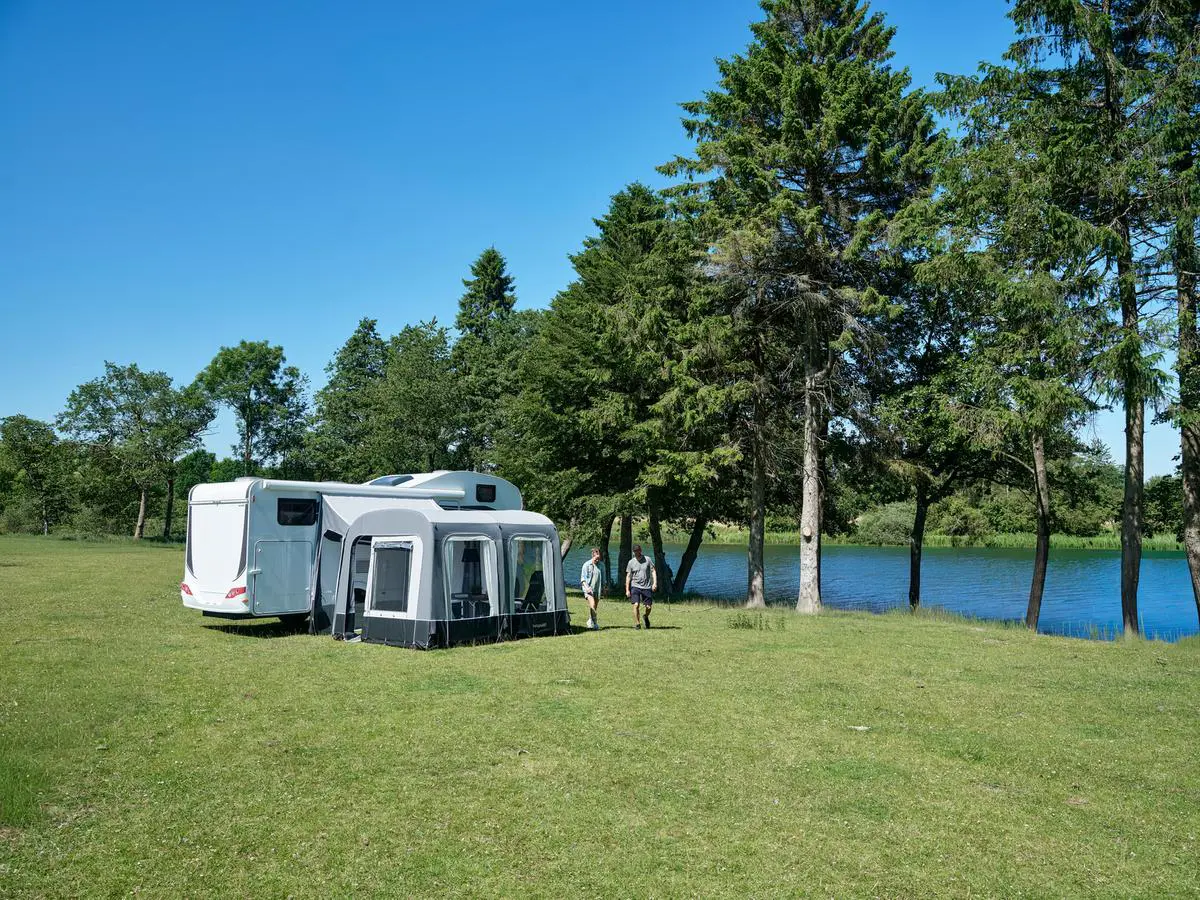
Isabella entered the driveaway awning market for the first time in 2026 with the Ventura Air Vita, and it's already one of the most talked-about launches in the sector. Isabella is Europe's largest awning manufacturer with a heritage stretching back to 1957, and the Vita brings that reputation into the motorhome and campervan space. The awning uses a fully interconnected air tube system that inflates from a single valve using the included 12V electric pump, distributing air evenly across the entire structure. That single-system approach reduces the risk of leaks at joints and welds compared to multi-valve setups. The Vita measures 330cm wide by 270cm deep, and all front and side panels unzip completely, converting the awning into an open sun canopy for hot weather. Three separate tunnel heights (Small 180-200cm, Medium 240-260cm, Large 260-280cm, sold separately) cover the full range from VW campervans through to large coachbuilt motorhomes. The roof uses a 270g/m2 printed polyester, the sides use Isabella's VenTex fibre-dyed polyester at 300g/m2, and the base skirt is heavy-duty PVC at 480g/m2. Optional annexes fit to either side for additional sleeping or storage space. It's a premium product pitched at owners who want Isabella build quality in a driveaway format, and the early demand has been strong.
In a campervan without an awning, the bed, the kitchen, and the seating area are all the same space, often simultaneously. Making dinner means sitting on the bed. Reading a book means doing it next to the stove. A driveaway awning creates a separate room where you eat, socialise, and store daytime gear, leaving the van interior as a dedicated sleeping and driving space. This separation makes a bigger difference than most people expect. It's the single change that turns a campervan trip from "living in a vehicle" to "camping with a vehicle."
The UK averages around 156 rainy days per year. On a typical week-long camping trip, you'll get at least two days with some rain. Without an awning, rainy days mean sitting in the van with the door closed, looking out of the windscreen. With an awning, rain becomes background noise while you sit in a sheltered space with the door open and the kettle on. Awnings with a hydrostatic head rating of 3,000mm or above handle normal UK rain showers comfortably. For the kind of prolonged, heavy rain that arrives with Atlantic weather systems in Wales, Scotland, and the South West, a 4,000mm to 6,000mm rated fabric provides better protection. Vango's Sentinel ECO Pro fabric offers 6,000mm HH, while Outwell's Outtex 4000 delivers 4,000mm.
This is the defining feature that separates a driveaway awning from every other type of awning. You leave. Without packing anything down. Without losing your pitch setup. Without stuffing everything back into the van. You mark your wheel position with chalk or a peg, roll back the tunnel section, toggle it shut, and drive off. When you return, you line up with the marks, reverse in, and reconnect the tunnel to the kador strip or driveaway kit. The whole reconnection process takes under five minutes once you've done it a couple of times. This matters because a motorhome or campervan is your only vehicle on site. If you need milk, a gas canister, or want to visit a town 10 miles away, you need to drive. A driveaway awning means you don't have to choose between a day out and a comfortable camp.
Most campervans sleep two adults comfortably, four at a push. A motorhome sleeps two to four depending on the layout. Adding a clip-in inner tent bedroom to a driveaway awning increases your sleeping capacity by two or four people without needing a larger vehicle. This is how families with teenagers, groups of friends, and grandparents travelling with grandchildren make campervan holidays work. The children or guests sleep in the awning, the adults sleep in the van, and everyone has their own space. Inner tent bedrooms from Vango, Outwell, and Easy Camp clip into the awning's internal hanging points and fit or remove in minutes.
To make this concrete, here are the real-world situations where motorhome and campervan owners find their driveaway awning paying for itself.
| Scenario | How the Driveaway Awning Helps | Recommended Awning Style |
|---|---|---|
| Family week at a holiday park | Creates a separate living and play area for children. Kids sleep in inner tent bedrooms while parents keep the van. Gear storage keeps the van tidy. | Large side-facing air awning (e.g. Vango Kela Pro Air, Vango Galli Pro Air) |
| Weekend touring with frequent site changes | Fast pitch and pack means less time setting up and more time exploring. Compact pack size leaves room for bikes and gear. | Compact front-facing air awning (e.g. Vango Faros III Air, Quest Falcon Air 300) or lightweight poled awning (e.g. Easy Camp Utne, Quest Eagle) |
| Rainy bank holiday weekend | Sheltered living area keeps you dry outside the van. Wet coats and boots dry in the tunnel section instead of steaming up the van. | Any awning with sewn-in groundsheet and 3,000mm+ hydrostatic head |
| Dog-friendly campsite in the Lake District | Muddy dogs dry off in the awning or tunnel rather than covering the van's upholstery. Food and water bowls live in the awning. | Side-facing awning with tunnel storage zone (e.g. Vango Kela Pro Air, Outwell Santa Monica Air Air) |
| Two-week European coastal tour | Awning provides shade in hot weather and secure storage at each stop. UV-resistant fabric handles southern European sun. | Mid-weight air awning with mesh panels and UV-resistant fabric |
| Music festival in a campervan field | Secure, sheltered area beside the van for socialising and storing belongings. Keeps van interior clean and private. | Compact front-facing or tailgate awning (e.g. Brunner Escape, Easy Camp Krossbu, Quest Kestral) |
| Retired couple on a three-month UK tour | Semi-permanent living space at each stop. Awning goes up for 3-7 days at a time. Durable fabric handles repeated pitching. | Premium air awning with high-denier fabric (420D+) and ColourLok UV protection |
| Solo camper on Certificated Sites | One-person pitching in under 10 minutes. Sheltered area for cooking and reading when alone on site. | Lightweight inflatable air awning under 10kg packed |
A driveaway awning isn't the only way to get extra space at a campsite. Understanding how it compares to the alternatives helps you decide if it's the right choice for your situation.
| Option | Pros | Cons | Best For |
|---|---|---|---|
| Driveaway awning | Stays pitched when you drive away. Freestanding. Adds sealed living space with groundsheet. Accepts inner tent bedrooms. | Higher cost (inflatable models start around £300). Takes 8-20 minutes to pitch depending on type. Bulky when packed. | Stays of 2+ nights where you need the vehicle during the day |
| Windout cassette awning (e.g. Fiamma F45, Thule Omnistor) | Permanently mounted to vehicle. Rolls out in under 2 minutes. No setup or storage hassle. | Open-sided with no walls. No weather protection from rain or wind. Cannot be left pitched without the vehicle. | Quick shade for lunch stops, brief overnight parking, day use only |
| Pop-up gazebo or event shelter | Pitches in under 2 minutes. Freestanding. Lightweight. Low cost. | Open-sided or minimal side panels. Not waterproof in sustained rain. Unstable in wind. Some campsites ban pop-up shelters. | Fair-weather day shade only. Not suitable as living space |
| Sun canopy or tarp | Lightweight. Packs small. Attaches to awning rail for rain or sun cover over the door area. | No enclosed space. No groundsheet. No sleeping capacity. Minimal weather protection. | Overnight stops, aires, and brief stays where shade is the main need |
| Standalone tent pitched beside vehicle | Lower cost than an awning. No attachment to vehicle needed. Full range of sizes available. | Not connected to the vehicle, so no covered walkway between van and tent. Must pack away entirely when driving. | Owners without awning rails or those who want sleeping space only |
Driveaway awnings work with any vehicle that has an awning rail, a roof rail, or a way to attach the tunnel section. In practice, this covers the vast majority of motorhomes and campervans on UK roads. The attachment height of your vehicle determines which size category you need.
| Height Category | Attachment Height Range | Typical Vehicles |
|---|---|---|
| Low | 180cm to 210cm | VW Transporter T4, T5, T6, T6.1, VW California, Ford Transit Custom, Vauxhall Vivaro, Renault Trafic, Mazda Bongo, Citroen Berlingo conversions |
| Mid / Standard | 210cm to 255cm | High-top panel van conversions on Peugeot Boxer, Fiat Ducato, Citroen Relay, Mercedes Sprinter chassis. Some larger VW Crafter conversions. |
| Tall | 255cm to 295cm | Coachbuilt motorhomes from Bailey, Swift, Auto-Trail, Elddis, Bessacarr, Chausson. A-class motorhomes. Overcab motorhomes. |
The most common mistake first-time buyers make is ordering the wrong height. Park your vehicle on level ground, measure from the floor straight up to your awning rail or channel at both ends of the vehicle, and use the longer of the two measurements. Most motorhomes sit slightly higher at the rear due to suspension compression, and that difference affects how the tunnel section sits when connected.
If your vehicle doesn't have an awning rail fitted, you have three main options. You have a C-channel or Reimo-style rail professionally fitted (costs typically range from £80 to £200 including parts and fitting). You use throw-over straps that cross the roof and peg down on the opposite side. Or you use a magnetic driveaway strip if your vehicle has a steel roof. An awning rail with a driveaway kit gives the best seal and the most weather-resistant connection.
The range between the least expensive and most expensive driveaway awnings is wide, and buyers who haven't owned one before often wonder what accounts for the difference. It's not branding or marketing fluff. The differences are tangible and relate directly to four factors: frame type, fabric specification, features, and design complexity.
The single biggest factor in the price gap is the frame. Inflatable air beam awnings from Vango, Outwell, and Quest cost roughly twice as much as equivalent-sized poled awnings from brands like Easy Camp, Brunner, and Maypole. The air beam technology involves engineered inflatable tubes (Vango's SuperBeams are 13cm in diameter) with precision valves, reinforced seams, and a single-point inflation system. These are expensive to manufacture, but they allow one person to pitch the awning in 8 to 10 minutes and produce a structure that flexes with wind gusts rather than snapping. The Quest Falcon Air 300 uses its own FAT (Falcon Air Technology) system with replaceable air tubes that owners service themselves on-site if needed. Poled awnings use fibreglass or aluminium poles threaded through fabric sleeves. The materials cost less, the manufacturing is simpler, and the result is a lighter pack that separates into two bags (poles and fabric). The trade-off is a longer pitch time, the need for a second person in most conditions, and poles that are more prone to snapping in sustained high winds than air beams are to failure. The Easy Camp Reine (11.7kg, fibreglass poles, 320cm x 310cm footprint), the Brunner Beyond (12kg, external pole system, 180-220cm attachment height), and the Outwell Pine Hills (Aluflex aluminium poles, Outtex 3000 fabric, dual beading for all awning rails) are popular poled choices for campervan owners watching their budget.
Fabric is where the detail lives, and it's where the durability and longevity differences between awnings become clear over two or three seasons of use. Denier (D) measures the thickness and weight of individual fabric threads. A higher denier number means thicker, stronger, more durable fabric. Here's how the fabric tiers break down across the market:
| Fabric Tier | Typical Denier | Hydrostatic Head | UV Protection | Example Fabrics | Suited To |
|---|---|---|---|---|---|
| Entry level polyester | 68D to 75D | 3,000mm | UPF 30 | Easy Camp WeatherGuard 3000 (185T), Maypole standard polyester | Occasional weekend use in summer. 1-2 seasons of regular use before noticeable fading. |
| Mid-range polyester | 150D | 3,000mm to 4,000mm | UPF 30 to 50+ | Quest Tec150 (4,000mm HH, UPF 50+), Outwell Outtex 3000, Brunner 190T polyester | Regular weekend and holiday use across a full UK season. 3-5 seasons with proper care. |
| Premium polyester | 420D double ripstop | 4,000mm to 6,000mm | UPF 50+ with ColourLok | Vango Sentinel Active (4,000mm), Vango Sentinel ECO Pro (6,000mm), Outwell Outtex 4000 | Frequent touring, early and late season use, European sun. 5-8+ seasons with proper care. |
| Polycotton (cotton/polyester mix) | N/A (measured by weight g/m2) | Naturally water-resistant | UPF 50+ inherent | Vango Sentinel Signature (265% stronger than Sentinel Active) | Extended stays, hot climates, year-round use. Breathes in heat, retains warmth in cold. 8-10+ seasons. |
The difference between a 68-denier entry-level fabric and a 420-denier double ripstop is not subtle. The 420D fabric is roughly 245% stronger by tear resistance. It resists UV degradation significantly better, holds its waterproof coating longer, and doesn't rustle as loudly in wind. ColourLok technology, found on Vango's premium Sentinel fabrics, is a dye-lock process that reduces UV-induced colour fading, keeping the awning looking newer for longer. These are real performance differences that show up after the first season of use, not before.
Polycotton (a mix of cotton and polyester) sits at the top of the fabric hierarchy for comfort. It breathes, meaning it doesn't build up condensation on the inside the way pure polyester does on cold mornings. It stays cooler in hot weather and warmer in cool weather. It's quieter in wind because the heavier fabric doesn't flap and crackle like thin polyester. The downsides are weight (polycotton awnings are significantly heavier than polyester equivalents), pack size (larger), drying time (longer), and care requirements (more sensitive to mould if stored damp). For owners who tour southern Europe regularly or keep an awning up for extended seasonal pitches, polycotton is worth the premium.
-83610.webp)
Beyond frame and fabric, higher-priced awnings include features that cheaper models don't. Sewn-in groundsheets (versus clip-in or detachable) create a draught-free, insect-proof seal. Pre-angled air beams maximise headroom throughout the awning rather than creating low edges. Skylight windows in the roof let in natural light and allow stargazing. Mesh door panels provide ventilation without insects. Covered entry porches protect the doorway from rain dripping into the living area. SkyTrack systems (Vango) and HookTrack systems (Outwell) provide internal rails for hanging lights, storage nets, and accessories. Tension Band Systems like Vango's TBS II brace the frame against lateral wind movement. Multiple vehicle attachment options (kador strip, throw-over straps, roof bar tabs, pole and clamp sleeves) come pre-fitted on premium models, while budget awnings often include only one method.
A simple tunnel-style awning with a single living area and one door is cheaper to design and manufacture than a modular awning like the Vango Versos Air, which offers 18 different pitching configurations including front-facing, side-facing, and right-hand rail setups. Hexagonal designs like the Vango HexAway Pro require more complex panel cutting and beam geometry. Awnings that accept multiple optional extras (inner bedrooms in different positions, annexe extensions, front canopies) need more attachment points, zip interfaces, and structural engineering. Each additional configuration adds manufacturing cost, but it also adds versatility that simpler awnings lack.
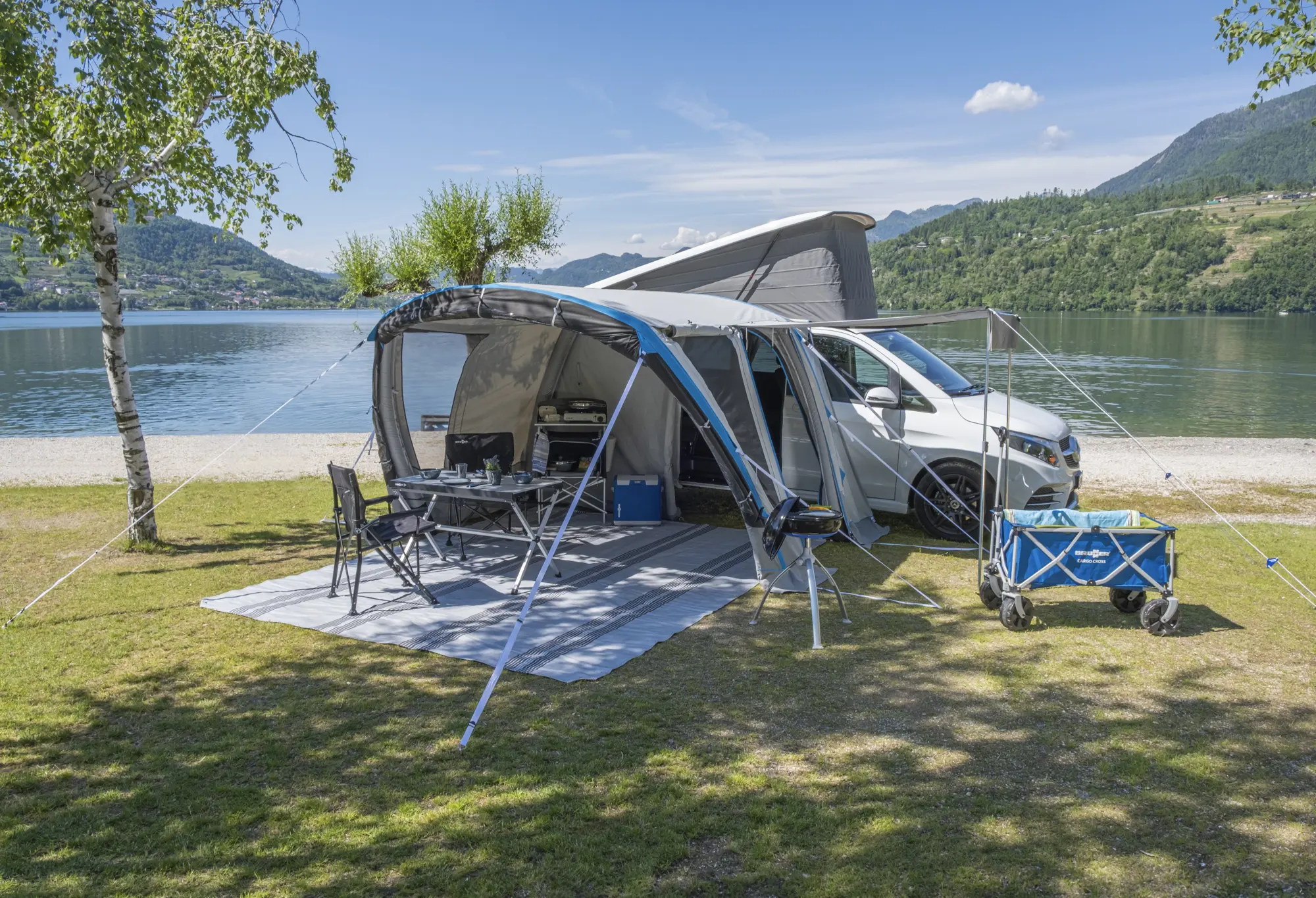
A driveaway awning is a considered purchase. Inflatable air models from brands like Vango, Outwell, and Quest typically start around £300 for compact models and rise above £1,000 for premium, full-sized awnings with high-specification fabrics. Poled alternatives from Easy Camp, Brunner, and Maypole start at lower price points but take longer to pitch and usually need two people. Here are the practical questions to work through before committing.
If you camp six or more weekends a year, or take two or more week-long trips, an inflatable driveaway awning will get enough use to justify the investment. If you camp once or twice a year, a poled awning at a lower price point or a simple sun canopy might be more proportionate. The rule of thumb from experienced motorhomers on UK forums is that three nights or more on a single pitch is where a driveaway awning starts to feel worthwhile. For stays of one or two nights, many owners don't bother pitching one.
A packed driveaway awning takes up a significant amount of storage space in your vehicle. A large inflatable awning like the Vango Galli Pro Air packs down to approximately 90cm x 36cm x 37cm. A compact model like the Vango Faros III Low packs to around 62cm x 35cm x 35cm. The Easy Camp Utne is one of the smallest on the market at 69cm x 24cm. In a VW Transporter with limited garage space, these dimensions matter. If you also carry bikes, surfboards, or other bulky gear, you need to plan where the awning will live during transit. Some owners store the awning in a roof box or an external carrier on a bike rack to free up internal space. Quest's driveaway range is expanding in 2025/2026, with the Buzzard 300 and updated Falcon models joining the Kestral tailgate awning, giving buyers more choice at competitive price points with characteristically small pack sizes.
Payload limits matter, particularly for smaller campervans and older motorhomes. A large inflatable driveaway awning weighs between 15kg and 25kg packed. Add a carpet (3 to 5kg), a groundsheet protector (2 to 4kg), inner tent bedrooms (2 to 4kg each), and a driveaway kit (under 1kg), and you're looking at 25 to 40kg of awning-related equipment. For a VW Transporter conversion with a typical payload limit of 400 to 600kg, that's manageable. For a coachbuilt motorhome that's already close to its Maximum Technically Permissible Laden Mass (MTPLM), every kilogram counts. The Vango Faros III Air at under 10kg packed is specifically designed for owners who need to keep weight down.
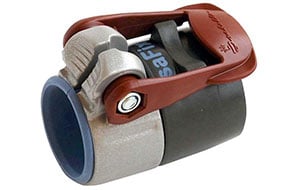
Most driveaway awnings don't include a driveaway kit in the box. This is the connecting hardware (kador strip and figure-of-eight pieces) that lets you detach the awning from the vehicle and reconnect it later. Without a driveaway kit, you'd need to slide the awning's beading directly into the vehicle's awning rail, which means you won't be able to disconnect without dismantling the whole setup. A 6mm to 6mm kit fits standard C-channel and Reimo-style awning rails. A 4mm to 6mm kit fits Fiamma F45, F65, and Thule Omnistor windout cassette awnings. The exception is Quest driveaway awnings like the Falcon Air 300, which feature a built-in zip-off driveaway attachment along the kador beading, eliminating the need for a separate kit entirely. For all other brands, make sure you order the right size kit alongside the awning itself. Driveaway kits and awning connection accessories are available separately.
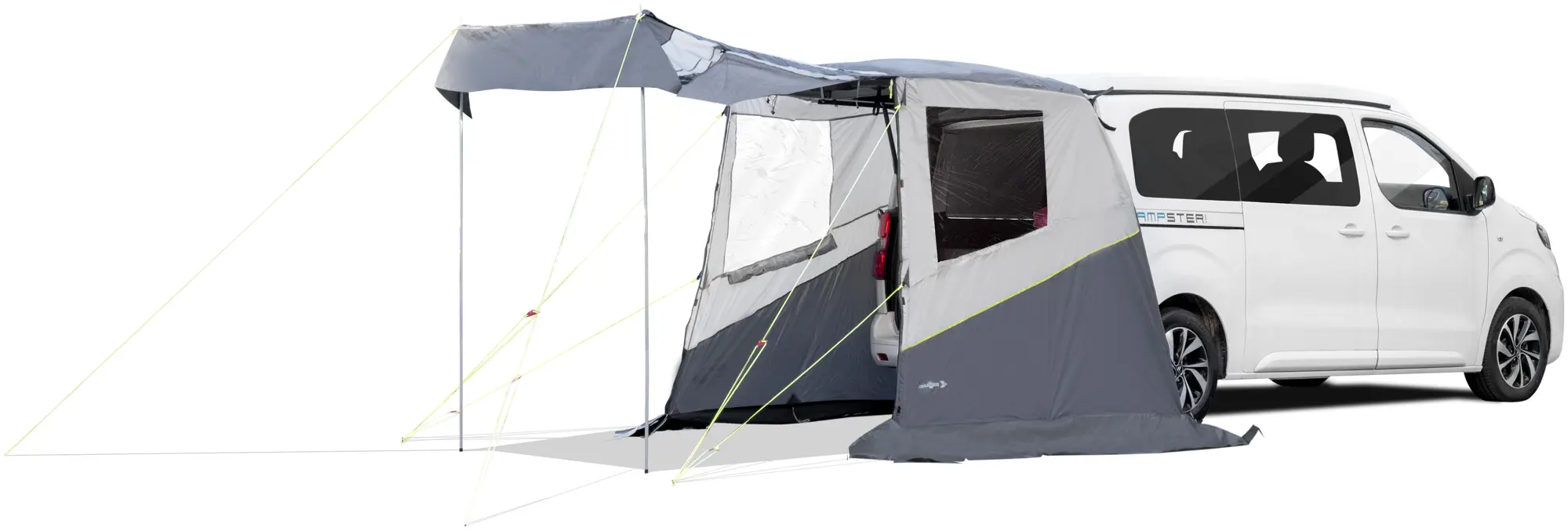
Owning a driveaway awning is one thing. Getting the most from it is another. Here are the practical tips that regular users learn from experience.
Pitch your awning in the garden or driveway before your first trip. Work out the sequence, learn where the pegging points are, figure out the pump, and time yourself. Most owners find their first pitch takes 25 to 40 minutes for an inflatable awning and significantly longer for a poled model. By the third or fourth attempt, inflatable awnings typically go up in 8 to 15 minutes. Arriving at a campsite in the rain and unboxing an awning for the first time is a recipe for frustration. A trial pitch at home removes that stress entirely.
When you disconnect the awning and drive away, mark where your wheels were with chalk on hard-standing or a peg in grass. When you return, lining up with the marks means the tunnel section reconnects cleanly to the awning rail without having to shuffle the van back and forth. Experienced owners also leave a chair or ground mat visible in the awning to signal to other campers that the pitch is occupied while the vehicle is away.
The tunnel between the vehicle and the main awning is dead space on many setups. Use it. Store wet boots, coats, and dog towels there. Keep a doormat at the van end and another at the awning end. Some owners hang a shoe organiser on the tunnel wall for wellies and sandals. The tunnel is also the best place to run your electric hook-up cable from the van's inlet into the awning, keeping it off the ground and out of the way.
A groundsheet protector goes underneath the awning to protect the sewn-in groundsheet from stones, twigs, and rough ground surfaces. An awning carpet goes on top of the groundsheet and transforms the feel of the space from "tent floor" to "room." Both accessories are sold separately and are brand-specific to fit each awning model. They add weight and packed bulk, but owners who use them consistently say they make the awning feel like a proper living space rather than an accessory.
This is the single most important maintenance rule for any driveaway awning. Polyester and polycotton fabrics develop mould within days if packed away damp, and mould damage is not covered under any manufacturer warranty. If you pack up in wet conditions at the campsite, unpack the awning at home as soon as possible and drape it over a washing line, fence, or garage rafters until completely dry. For awnings with inflatable air beams, deflate fully and leave the valves open during storage to prevent moisture building up inside the beams. Store in a breathable bag in a cool, dry place away from direct sunlight.
| Trip Type | Typical Stay Length | Worth Pitching? | Recommended Setup |
|---|---|---|---|
| Overnight stop / aire / Brit Stop | 1 night | Not usually. Use a sun canopy or tarp for quick shade instead. | Sun canopy or no awning |
| Weekend break | 2-3 nights | Yes, if you plan to use the vehicle during the day. | Compact air awning for fast pitching |
| Bank holiday long weekend | 3-4 nights | Yes. Extra space matters more over a longer weekend. | Mid-size air awning with optional bedroom |
| One-week holiday | 5-7 nights | Highly recommended. The awning becomes your main living area. | Full-size air awning with carpet, groundsheet protector, and bedroom |
| Two-week touring holiday | 14+ nights, multiple sites | Yes, at stops of 2+ nights. Some owners leave it packed for single-night stops between longer stays. | Durable air awning with UV-resistant fabric |
| Seasonal pitch | 4-6 months | Essential. The awning stays up for the duration. | Premium awning with highest fabric specification available |
It's worth being upfront about what a driveaway awning won't do, because managing expectations matters when you're spending several hundred pounds.
A driveaway awning is not insulated. In cold weather (below about 5 degrees Celsius), the interior temperature of the awning will be close to the outside temperature. You won't get the warmth of a heated van interior. An optional skyliner (an insulating inner roof panel) improves this by creating a thermal barrier, reducing condensation and retaining some warmth, but it won't turn the awning into a heated room. For genuine cold-weather camping, the van itself is your warm space, and the awning serves as covered storage and a sheltered cooking area.
A driveaway awning is also not burglar-proof. It's a fabric structure with zip closures. Zipping it shut deters opportunistic theft and keeps honest people honest, but it won't stop a determined thief. Don't leave valuables in the awning when you drive away. Laptops, wallets, and electronics should stay in the locked van or go with you. Most campsite insurance policies don't cover items stolen from awnings unless there are signs of forced entry to the locked vehicle itself.
Finally, a driveaway awning adds time to your setup and pack-down routine. Even a fast-pitching inflatable model adds 10 to 15 minutes at each end of your stay, plus packing time. If you're a "park and sleep, leave at dawn" type of traveller who values speed over comfort, a driveaway awning might not match your style. They're at their best when you're staying put for at least two nights and want to make a proper camp.
© Leisureshopdirect Ltd - 2004 . All rights reserved.